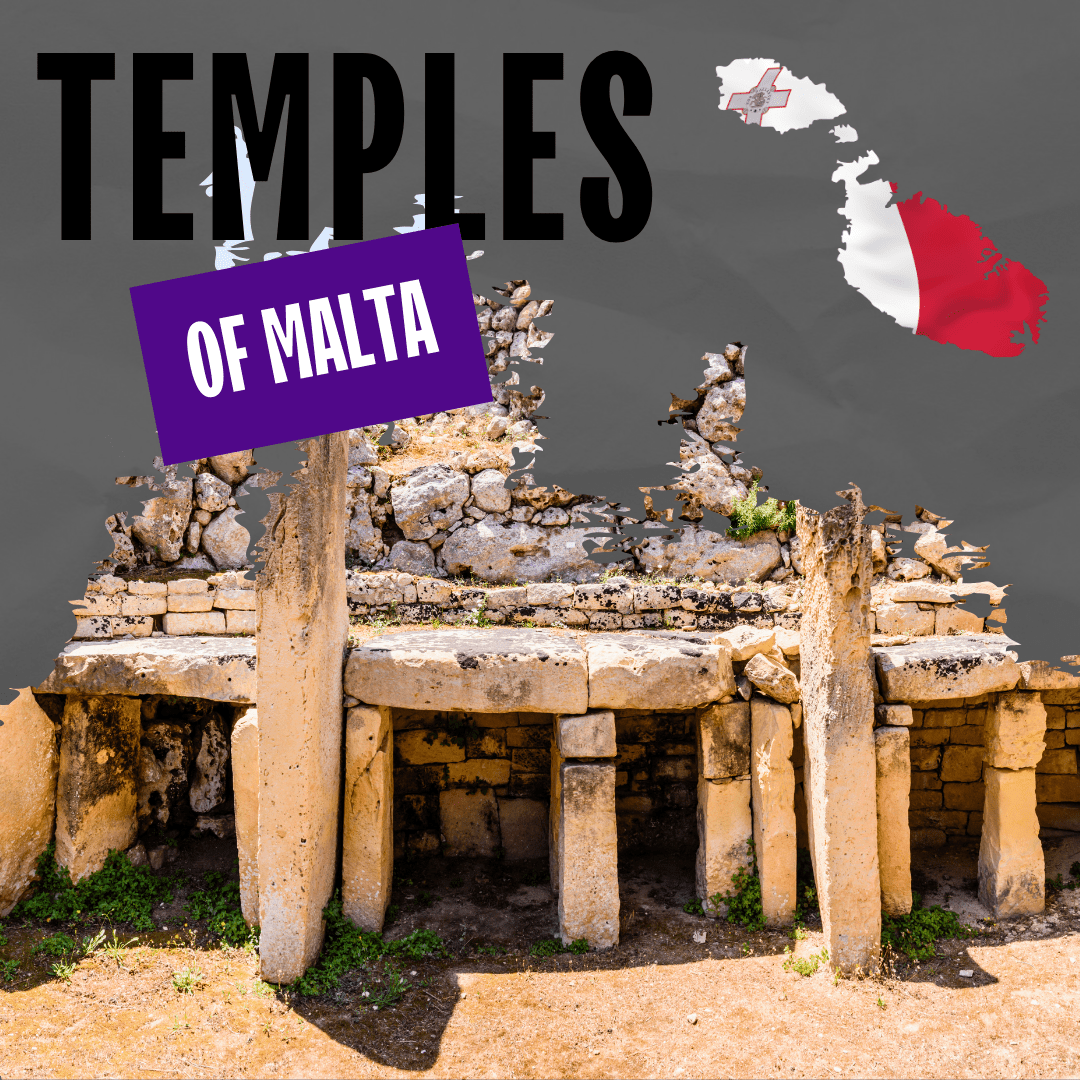
Malta and Gozo, two islands steeped in history, are home to some of the most ancient temples in the world. These megalithic structures, dating back to around 3600-2500 BC, offer a glimpse into the Neolithic period and are recognized as UNESCO World Heritage Sites. These temples are architectural marvels of their time and provide invaluable insights into prehistoric peoples’ religious and ceremonial practices.
Ħaġar Qim and Mnajdra Temples
Located near each other, the Ħaġar Qim and Mnajdra complexes are prominent megalithic sites. Ħaġar Qim stands atop a ridge with views over the sea and features unique architectural elements like porthole doorways. Mnajdra made primarily of coralline limestone, consists of three temples with astronomical alignments, especially significant during equinoxes and solstices. Both sites are protected by shelters to preserve their deteriorating structures.
Mnajdra
The Mnajdra Temple Complex, a UNESCO World Heritage Site, is a remarkable example of megalithic architecture. It’s known for its astronomical alignment and consists of three temples: the upper, middle, and lower, each with unique characteristics and serving different purposes, possibly including religious ceremonies and astronomical observations.
Ta’ Ħaġrat Temples
Part of the UNESCO World Heritage Sites, the Ta’ Ħaġrat temples in Mġarr, Malta, are among the world’s oldest religious sites. The larger temple dates back to the Ġgantija phase, while the smaller one to the Saflieni phase. Built from lower coralline limestone, these temples are less regularly planned and smaller than other Maltese neolithic temples.
Tal-Qadi Temple
Tal-Qadi, a megalithic temple in Salina, Malta, is in poor condition today, with only its general outline visible. Built during the Tarxien phase, it uniquely faces northeast and features a probable four-apse shape. Notable discoveries include a slab possibly used as a star map or moon calendar.
Skorba Temples
The Skorba temples, located on the northern edge of Żebbiegħ, Malta, are crucial for understanding Malta’s neolithic culture. Although not in good condition, these temples, excavated in the 1960s, provided insights into early Maltese culture and are part of the UNESCO World Heritage Sites.
Xemxija Archaeological Site
The Xemxija Heritage Trail, also known as the Old Roman Road, features various archaeological finds, including Neolithic temples, Punic tombs, Roman baths, and other historical structures. This trail showcases the diverse historical use of the area, from burial sites to honey production.
Malta and Gozo’s ancient temples offer an incredible journey through time, revealing the architectural ingenuity and cultural richness of early civilizations. These sites are not just historical landmarks but also serve as a testament to the island’s rich heritage, attracting historians, archaeologists, and travellers alike.
 Travel With René